

When a website loads slowly, goes offline during a sale, or changes owners without warning, the problem is often bigger than the front end. The real story sits in the technical trail behind the site: **Website Uptime**, **Website Records**, and **Domain History**. Together, these three signals reveal whether a site is reliable, who has controlled it, and how it has behaved over time.
This matters more than ever. In 2024, the average cost of downtime for major enterprises was still measured in thousands of dollars per minute, with some estimates placing it above $5,000 per minute for many organizations. For e-commerce, even a brief outage can translate into abandoned carts, lost search visibility, and damaged customer trust. A site can look polished and legitimate on the surface, while its operational history tells a very different story.
## Why Website Uptime is a business metric, not just a technical one
**Website Uptime** is usually expressed as a percentage, and the difference between 99.9% and 99.99% is more significant than it first appears.
- 99.9% uptime allows about 8.76 hours of downtime per year.
- 99.99% reduces that to about 52.6 minutes annually.
- 99.999% leaves only about 5.26 minutes.
Those numbers explain why companies such as Amazon, Google, and Microsoft invest heavily in redundancy, global load balancing, and automated failover. In practical terms, uptime affects search engine crawling, conversion rates, API reliability, and customer support load. If a payment gateway or login endpoint becomes unavailable, the issue is no longer “just technical”; it becomes a revenue and reputation problem.
Monitoring uptime has also become more granular. Modern observability tools do not only check whether a site responds; they track latency, DNS resolution, TLS handshake time, and regional availability. A site may appear “up” in one country and fail in another because of CDN misconfiguration or routing problems. That is why enterprise teams increasingly treat uptime as a distributed systems concern rather than a simple ping test.
## What Website Records reveal about the technical footprint
**Website Records** cover the DNS and infrastructure data that make a site reachable: A records, AAAA records, CNAMEs, MX records, TXT records, and NS records. These records show where traffic is sent, which mail servers are authorized, and which security policies are active.
For example, a TXT record with SPF, DKIM, and DMARC entries can reduce email spoofing, while a misconfigured MX record can break inbound mail completely. In cloud migrations, changing A or CNAME records is often the final step before cutover, but it is also where outages happen if TTL values are too long or propagation is not planned.
A good illustration is multi-region failover. A company might point its main domain to a load balancer in Virginia while keeping a secondary record in Frankfurt. If the primary region fails, DNS can route users elsewhere. The effectiveness of that design depends on record strategy, health checks, and how quickly resolvers respect changes. In practice, a low TTL can speed recovery, but it can also increase DNS query volume and operational complexity.
Website Records are also useful for security audits. Internet Resources Security teams review them to detect forgotten subdomains, exposed staging environments, and third-party integrations that no longer need access. Many breaches begin with overlooked infrastructure, not sophisticated exploits.
## Why Domain History is essential for trust and risk assessment
A domain name can change hands, and its past ownership often matters as much as its current configuration. **Domain History** can show previous registrants, historical DNS changes, past hosting providers, and whether the domain was ever associated with spam, phishing, or malware.
This is especially relevant in due diligence. Before buying a domain or inheriting one through an acquisition, teams often check historical registration data, archive snapshots, and reputation scores. A domain that was used for black-hat SEO in 2017 may still carry risk today, even if the current site is legitimate. Search engines and email providers may have lingering trust signals, and some security tools keep reputation databases for years.
There is also a branding angle. A company that rebrands from an old domain may want to preserve backlink equity and redirect authority properly. Poor migration planning can cause ranking drops, broken links, and customer confusion. In contrast, a carefully managed transition uses 301 redirects, updated canonical tags, refreshed sitemap submissions, and consistent records across the DNS layer.
## Practical ways teams use these signals together
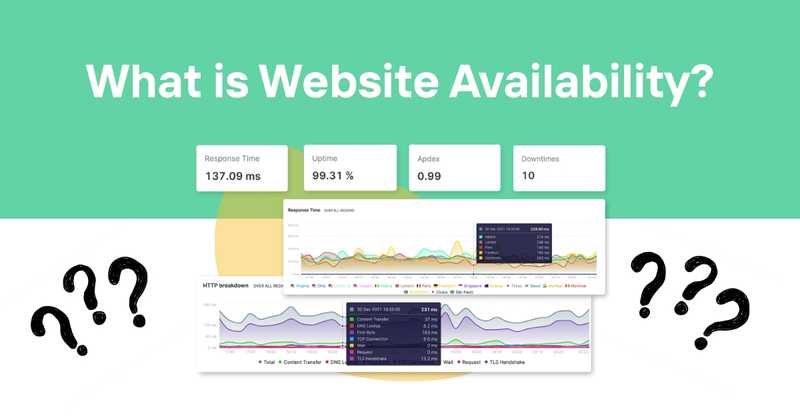
The strongest website assessments combine all three dimensions: uptime, records, and history.
1. A SaaS company checks **Website Uptime** to verify SLA compliance after moving to a new cloud region.
2. Its security team reviews **Website Records** to confirm that DNS, email authentication, and CDN settings match the architecture diagram.
3. The legal and IT teams examine **Domain History** before signing off on a merger-related migration to avoid inheriting reputational baggage.
This approach is becoming standard in industries where trust is expensive to lose: fintech, healthcare, media, and online retail. A bank, for example, may require evidence that the domain has not previously hosted suspicious content and that the DNS setup supports strict transport security and valid certificate chains. An online marketplace might compare historical downtime trends before choosing a checkout provider.
## What to watch next
The next wave of site reliability work will be shaped by automation and provenance. AI-driven monitoring is already helping teams predict outages from latency drift, certificate expiration, or unusual DNS churn. Meanwhile, browser vendors, registrars, and security platforms are tightening identity checks around ownership and record integrity.
Website Metrics For website operators, the actionable move is clear: treat uptime dashboards, DNS reviews, and historical domain checks as one system, not three separate tasks. That perspective catches problems earlier, shortens incident response, and prevents surprises during launches, migrations, and acquisitions.